
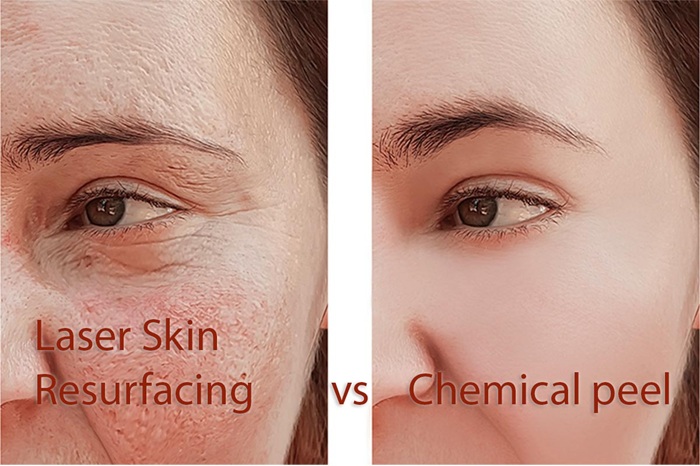
In the realm of skin rejuvenation treatments, two procedures have significantly risen in popularity: chemical peels and laser resurfacing. Both aim to enhance skin appearance, but choosing the right treatment can be daunting. Let’s delve into these options to help you make an informed choice.
What Are Chemical Peels? How They Work
Chemical peels involve exfoliating the skin’s outer layer using specific acids, such as AHAs and BHAs. This method reveals a new skin layer that’s often smoother and less wrinkled.
Types of Chemical Peels
- Light Peels: Target the outer skin layer.
- Medium Peels: Reach the middle layers of skin.
- Deep Peels: Penetrate deeper layers for more significant results.
Who Benefits?
Most beneficial for those experiencing acne scars, mild pigmentation issues, and dullness.
What Is Laser Skin Resurfacing? How Lasers Work
Laser resurfacing employs targeted beams of light to remove skin layers, promoting collagen production for better texture.
Types of Lasers
- Ablative Lasers: Offer deeper rejuvenation but require more downtime.
- Non-ablative Lasers: Less invasive with quicker recovery but subtle improvements.
Who Benefits?
Ideal for addressing deep wrinkles, scars, sun damage, and significant texture improvements.
Chemical Peel vs Laser: Key Differences
| Feature | Chemical Peel | Laser Resurfacing |
| Depth | Surface to medium | Surface to deep |
| Target Concerns | Pigmentation, mild texture issues | Wrinkles, deeper scars, sun damage |
| Downtime | Low to moderate | Moderate to high |
| Skin Type Suitability | Safe for most skin tones | Requires caution for darker skin tones |
| Results | Gradual improvement | Faster, more noticeable results |
Noticeable faster Which Treatment Is Better for…? Acne Scars
Lasers are generally more effective for deep acne scars. Explore additional treatments.
Fine Lines & Wrinkles
Ablative lasers are preferable for tackling pronounced wrinkles.
Melasma & Hyperpigmentation
Chemical peels are safer for these conditions, especially for darker skin tones.
Enlarged Pores
Lasers offer compelling results for reducing pore size.
Sun Damage
Both treatments can help, but laser treatments offer significant improvements more quickly.
Cost Comparison
- Chemical Peels: Range from $150 to $600 per session.
- Laser Resurfacing: Can range between $300 to $1000 per session.
- Frequency: Chemical peels may need multiple sessions, while lasers often require fewer sessions.
Safety, Side Effects & Recovery
Both treatments pose specific risks. People with sensitive skin or certain medical conditions should consult a professional. Peels may cause redness and flaking; lasers might result in temporary swelling and redness. Find professional guidance.
Can You Combine Chemical Peel & Laser Treatments?
Combining these treatments can offer enhanced results, but they should be spaced weeks apart. Consult a dermatologist for personalized advice.
When to See a Professional
Choosing between these treatments requires expertise. Consider your individual skin concerns and consult with a specialist to determine the best course.
Conclusion
Both chemical peels and laser resurfacing offer valuable benefits for skin rejuvenation. Always consult with a licensed provider to achieve optimal and safe outcomes.
FAQ
Q1: Which treatment is better for acne scars?
A: Laser resurfacing is more effective for deep acne scars by stimulating collagen and resurfacing deeper skin layers.
Q2: Are chemical peels safe for darker skin tones?
A: Yes, chemical peels are generally safer for darker skin tones when performed correctly by trained professionals.
Q3: Which option has less downtime?
A: Chemical peels typically have less downtime, especially light and medium peels, compared to laser resurfacing.
Q4: Can chemical peels and laser treatments be combined?
A: Yes, they can be combined for enhanced results but must be spaced weeks apart under professional guidance.
Q5: Which treatment gives faster visible results?
A: Laser resurfacing usually delivers faster and more noticeable results, especially for wrinkles, scars, and sun damage.