
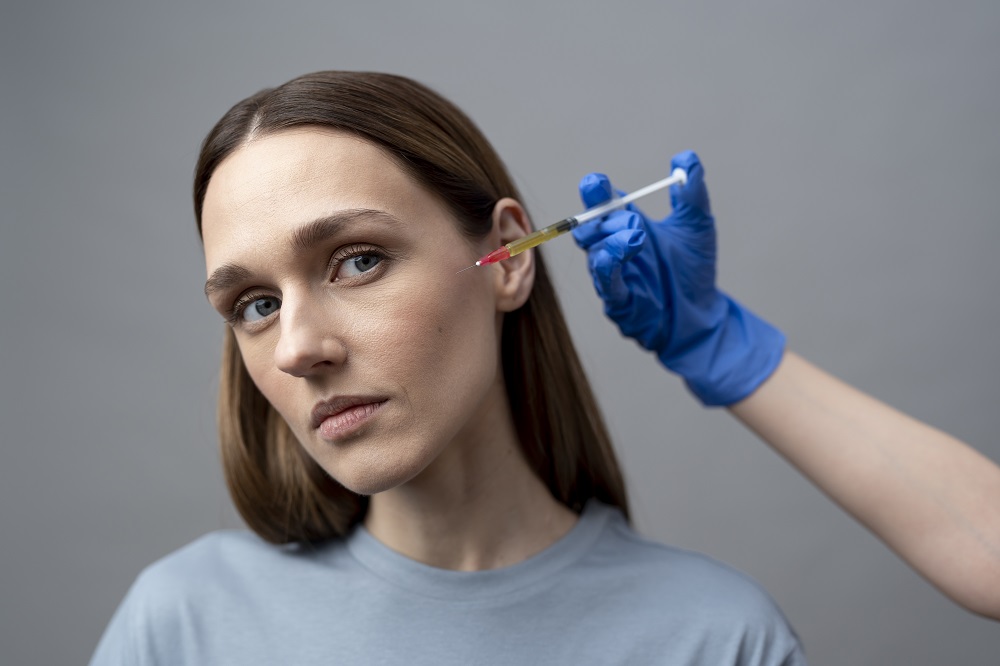
Around week 10 or 11 after Botox, something shifts. You raise your eyebrows and notice just a little more movement than there was a few weeks ago. The lines are not fully back, but you can tell something is changing.
That is the moment most people start wondering: is it already wearing off? Did it not last as long as it should? Is it too soon to call the med spa?
If you are at that point right now, or if you are considering neurotoxin injections in Cumming, GA for the first time and want to understand the commitment, this guide answers the real questions. How long Botox lasts by area, what makes it fade faster, what you can do to extend results, and when to rebook.
How Long Does Botox Last on Average?
The honest answer most providers give is 3 to 4 months. That is the window most patients experience for the majority of treated areas.
But there is nuance to that number. Botox does not flip off like a switch. It fades gradually. Most people notice the first hints of muscle movement returning around weeks 10 to 12. Full movement comes back over the following weeks if no touch-up is scheduled.
So when a provider says “3 to 4 months,” they mean the period of meaningful results before lines start visibly returning. Some patients stretch closer to 4 months. Some notice movement coming back closer to 10 weeks. Both are within normal range.
Does Botox Last Longer the More You Get It?
For many patients, yes. And this is one of the reasons regular Botox patients often feel like their treatments get more efficient over time.
Here is why. Repeated Botox injections gradually weaken the targeted muscles. Weaker muscles need less product to achieve the same level of relaxation and take longer to fully rebuild their nerve signal. Patients who have been getting consistent treatments for 2 to 3 years often notice that results are lasting noticeably longer than they did in year one.
First Timers vs Long-Term Patients
If your first round of Botox did not last as long as you hoped, that is actually very common. Untreated muscles are at full strength, and it takes consistent sessions before the muscle-weakening effect builds up meaningfully.
By the second or third treatment on a regular schedule, most patients find their duration improves. Sticking with a consistent 3-month schedule in the early months builds that foundation faster.
How Long Does Botox Last by Area?
Different parts of the face have different levels of muscle activity, which affects how long results hold in each zone.
| Treatment Area | Typical Duration |
| Forehead lines | 3 to 4 months |
| Frown lines / “11s” | 3 to 4 months |
| Crow’s feet | 3 to 4 months |
| Lip flip | 2 to 3 months |
| Brow lift | 2 to 3 months |
| Jaw slimming (masseter) | 4 to 6 months |
Forehead Lines
Moderate muscle activity. Most patients enjoy 3 to 4 months of noticeably smoother forehead skin. Very expressive people may start seeing movement return a little sooner.
Frown Lines and “11s”
The corrugator muscles between the brows are often strong, especially in people who spend a lot of time squinting at screens or in bright sunlight. Results typically hold for 3 to 4 months, though very strong muscles may need slightly more product initially to achieve full relaxation.
Crow’s Feet
High-movement area. Every smile, squint, and laugh works these muscles. Results usually last 3 to 4 months, but patients who spend a lot of time outdoors in Georgia sun, where squinting is almost constant, sometimes feel results fading a bit sooner.
Lip Flip and Brow Lift
These treatments use smaller, more precise amounts of product in highly active areas. A lip flip typically lasts 2 to 3 months. A brow lift holds for roughly 3 months. The constant movement in these areas means the nerve signal returns faster.
Jaw Slimming (Masseter)
This one tends to outlast everything else. The masseter is a large, powerful muscle, but it is not constantly moving the way facial expression muscles are. Many patients find masseter Botox lasting 4 to 6 months, and with consistent treatment, some see even longer intervals between sessions.
What Makes Botox Wear Off Faster?
Metabolism and Exercise
Your body processes Botox the same way it processes many other things, and a faster metabolism means faster breakdown. Highly active patients and those who exercise intensely often find results do not hold quite as long.
This is also why providers recommend avoiding intense exercise for 24 hours after treatment. Elevated heart rate and increased blood flow right after injections can affect how the product settles.
Sun Exposure and Georgia Heat
North Georgia summers are hot and sunny. Frequent outdoor activity, long weekends at Lake Lanier, and time in the heat can increase circulation and blood flow, which may contribute to slightly faster breakdown over time.
Daily sun protection benefits your results in two ways: it protects the skin from UV damage and slows the appearance of lines coming back even as Botox gradually fades.
Muscle Strength and Area Treated
Strong muscles simply recover faster. If you are treating an area with heavy, well-established muscle activity, it will take more product and more consistency to see longer-lasting results. This is normal, not a failure.
Under-Dosing
This one is worth saying clearly. One of the most common reasons Botox wears off earlier than expected is not getting enough product to fully relax the muscle. A partially relaxed muscle recovers its nerve signal faster than one that is fully treated.
This is why lowest-price Botox is not always the best value. Under-dosing to keep the price down can mean results that fade in 6 weeks instead of 12. The Botox cost guide for Cumming, GA covers what proper dosing by area typically looks like so you can ask informed questions.
Stress and Sleep
Chronic stress and consistently poor sleep affect many physiological processes. While not the primary driver of how long Botox lasts, patients who track their results carefully often notice they get less mileage during particularly stressful periods. Worth knowing, even if it is not fully in your control.
Botox Aftercare: What Actually Makes a Difference
The first 24 hours after treatment are the most important for protecting your results.
What to Do Right After
Right after your appointment at Windermere Med Spa in Cumming, GA:
- Stay upright. Avoid lying flat for at least 4 hours after treatment.
- Do not rub, press, or massage the treated areas. The product needs time to settle where it was placed.
- Skip the gym for the rest of the day. Intense exercise raises your heart rate and blood flow, which can affect placement.
- Avoid alcohol for the remainder of the day. It increases bruising risk and affects circulation.
- Skip facials, facial massages, or any hands-on treatment in the treated zones for at least a week.
What Helps Long-Term
Beyond the first day, a few habits can support how well and how long your results hold:
- Sun protection daily. UV exposure accelerates skin aging and breaks down collagen, which makes expression lines appear more pronounced even before Botox fully wears off. A daily SPF 30 or higher protects the skin between treatments and helps results look better for longer.
- Stay consistent with your schedule. Rebooking at the 3-month mark, before results fully fade, is one of the most effective strategies for extending long-term results. When you let muscles fully recover between treatments, they rebuild strength and the next session starts from zero again.
- Medical-grade skincare. Retinoids, antioxidants, and barrier support products help maintain skin quality between sessions. A trained provider can recommend what is appropriate for your skin type and concerns.
Is Botox Safe? What You Should Know
Botox has been used in both medical and cosmetic settings for decades. When administered by trained medical professionals using FDA-regulated products, it has a well-established safety record.
The FDA has approved botulinum toxin type A for cosmetic use in treating forehead lines, frown lines, and crow’s feet in adults. Off-label uses like lip flips, brow lifts, jaw slimming, and neck bands are also common practice and considered safe in qualified hands.
Common Side Effects and How Long They Last
Most side effects from Botox are mild and short-lived:
- Small bumps at injection sites: flatten within hours
- Mild redness or bruising: settles in 1 to 3 days
- Slight headache on the day of treatment: typically resolves within 24 hours
- Temporary unevenness as the product settles: usually resolves on its own within 1 to 2 weeks
Rare but Possible Complications
A drooping eyelid or brow is the most commonly mentioned complication. It happens when the product migrates slightly to a neighboring muscle. This risk is meaningfully reduced when injections are done by an experienced provider who understands facial anatomy and uses precise placement.
If it does occur, it is temporary and resolves as Botox wears off. Your provider can also give guidance on how to manage it in the short term.
Who Should Not Get Botox Right Now
There are some situations where Botox is not appropriate:
- Pregnancy or breastfeeding
- Certain neurological or neuromuscular conditions
- Known allergy to botulinum toxin or its ingredients
- Active skin infection at or near the injection site
- Certain medications that increase risk of complications
A consultation at Windermere Med Spa reviews your health history before any treatment is recommended. If something makes the timing less ideal, your provider will say so directly.
When Should You Get Botox Again?
The 3-Month Rebooking Strategy
Most providers recommend scheduling your next appointment around the 3-month mark, not after lines have fully returned. There is a practical reason for this.
When you wait until muscles have fully recovered and lines are fully back, the next treatment essentially starts from scratch. When you rebook while some relaxation is still present, the next treatment builds on the existing effect, which supports longer results over time.
Think of it like maintaining progress rather than constantly starting over.
Timing Botox Around Your Life
A lot of patients in Cumming plan their Botox around major events: family photos, weddings, reunions, holiday gatherings, and work presentations. The key is booking 2 to 3 weeks before the event. Early enough that the product is fully settled and you are at peak results. Not the week before, when you are still in the early adjustment period.
For a broader look at what injectable options are available and how they work together, the guide on Botox vs dermal fillers in Cumming, GA is a good companion read.
What if You Want to Stop Getting Botox?
This is something first-timers wonder about a lot, and the answer is straightforward.
If you stop getting Botox, your muscles gradually return to full movement and your lines come back to where they were before you started. There is no rebound effect. Your face does not look worse. It just returns to its natural baseline over the weeks after your last treatment.
That is actually one of the reasons Botox is such a comfortable starting point for people who are not ready to commit to a longer-term treatment. You can try it, see how you feel about the results, and decide from there.
Botox at Windermere Med Spa in Cumming, GA
If you are approaching the 3-month mark and starting to notice movement coming back, now is the right time to book. Not because you have to, but because staying on schedule gives you the most consistent results and the best long-term value from each session.
And if you are still deciding whether Botox is right for you, a consultation at Windermere Med Spa is the clearest way to get a real answer for your specific face, muscle strength, and goals.
The team serves patients from Cumming, Forsyth County, Johns Creek, Alpharetta, and surrounding North Atlanta communities. Whether it is your first appointment or your tenth, the approach is the same: assess your face individually, dose appropriately, and give you realistic expectations on how long your results will last.
You can also explore the full range of non-surgical wrinkle treatments in Cumming, GA if you want to understand what other options can support and extend your injectable results.
FAQs:
Q1. How long does Botox last for forehead lines?
Ans: Most patients see 3 to 4 months of smooth forehead skin before movement and lines start returning. Very expressive patients or those with strong forehead muscles may notice results fading closer to the 10-week mark.
Q2. Does Botox last longer the more you get it?
Ans: Often yes. Consistent Botox treatments gradually weaken targeted muscles over time, which means the same amount of product produces longer-lasting relaxation. Many long-term patients find results stretching beyond 4 months after a couple of years of regular treatment.
Q3. What makes Botox wear off faster?
Ans: High metabolism, intense exercise, frequent sun exposure, and under-dosing are the most common factors. Strong muscles in the treatment area also recover faster than weaker ones, especially in early treatment stages.
Q4. How do I know when my Botox is wearing off?
Ans: You will start to notice more muscle movement in the treated area. For forehead Botox, you might feel the ability to raise your brows more fully. For crow’s feet, lines may start appearing more prominently when you smile. It is a gradual return, not a sudden drop-off.
Q5. Is it safe to get Botox every 3 months?
Ans: Yes. When administered by trained medical providers using FDA-regulated products, Botox has a strong safety profile for regular use. Most providers recommend a 3-month maintenance schedule for consistent results.
Q6. What should I avoid after Botox to make it last longer?
Ans: In the first 24 hours: avoid lying flat, rubbing the treated areas, intense exercise, and alcohol. Long term: daily sun protection, a consistent rebooking schedule, and supportive skincare all help extend how long your results look their best.
Q7. Can Botox last 6 months?
Ans: In some areas, yes. Masseter Botox for jaw slimming often lasts 4 to 6 months. For facial expression lines, reaching 6 months is less common in early treatment stages but can happen for long-term patients with consistently weakened muscles. Most people plan around a 3 to 4 month window.