
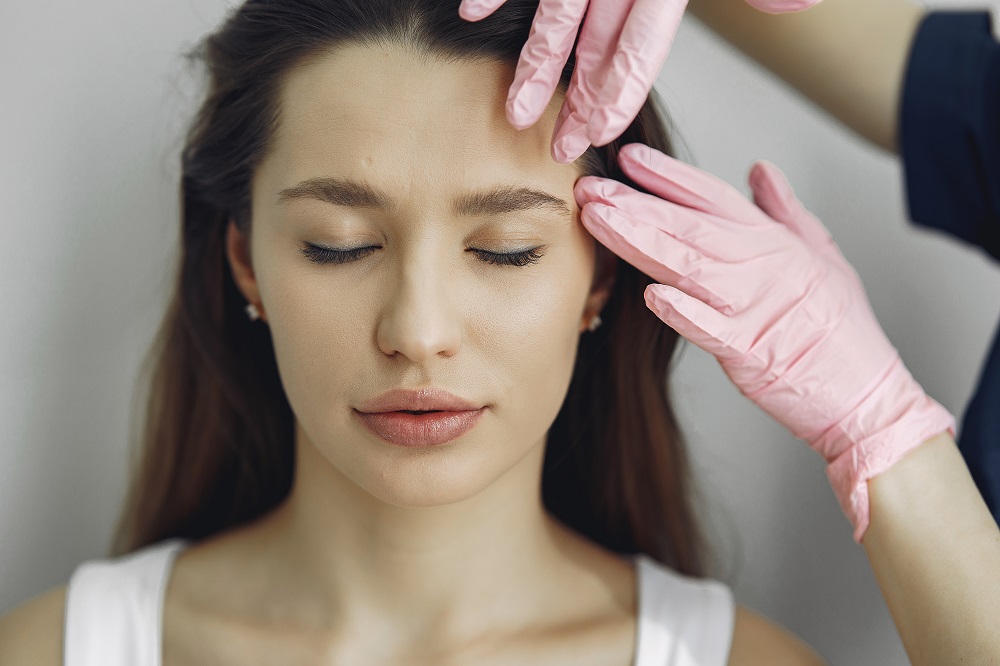
Forehead lines are among the most requested treatment areas in aesthetic medicine, and also among the most frequently overtreated. The forehead sits in constant view during conversation, and every eyebrow movement plays out across it in real time. That visibility is exactly why dosing precision matters more here than in almost any other treatment area, too little product leaves lines untouched, while too much produces the flattened, “frozen” look most patients researching a forehead lines treatment in Cumming, GA are specifically trying to avoid.
This article covers the anatomy behind forehead lines, how dosing decisions are actually made, and what separates a natural-looking result from an overtreated one.
Why Forehead Lines Show Up and Stick Around
Horizontal forehead lines form from repeated contraction of the frontalis muscle, a broad, flat muscle spanning the width of the forehead. The frontalis has one primary job: it’s the only muscle responsible for lifting the eyebrows. Every time it contracts, raising the brows in surprise, concentration, or simple conversation, the skin above folds along the same lines. Over the years, these folds transition from lines visible only during movement (dynamic lines) to lines visible even at rest (static lines).
This single-muscle anatomy is what makes forehead treatment more delicate than it might appear. The frontalis works in constant tension against the muscles that pull the brow downward, the corrugators, procerus, and orbicularis oculi.
Reduce frontalis activity too aggressively, and there’s nothing left to counteract those depressor muscles, resulting in a heavy, dropped brow. This is the most common complication associated with forehead treatment, and it’s almost always due to dosing or placement rather than a flaw in the treatment itself.
Botox and Dysport: How They Actually Work?
Neuromodulators don’t fill or resurface the skin. They temporarily reduce the nerve signals that tell the frontalis muscle to contract. When that muscle eases up, the skin above it doesn’t crease as sharply, so lines soften and, for many patients, disappear entirely while the product remains active.
Botox and Dysport are the two most widely used options for this treatment area, and both are FDA-approved with a long safety track record when injected by trained medical providers. They behave slightly differently in the body:
| Product | Typical Onset | Typical Duration | Notable Characteristic |
| Botox (onabotulinumtoxinA) | 3-7 days | 3-4 months | Tends to stay more concentrated at the injection point, useful for precise control |
| Dysport (abobotulinumtoxinA) | 2-5 days | 3-4 months | Tends to spread slightly further across the muscle, useful for broader foreheads |
Unit dosing is not directly interchangeable between the two; a Botox unit and a Dysport unit are not equivalent, which is why dosing decisions are always product-specific rather than a flat conversion. The choice between them often comes down to forehead size, muscle strength, and prior response, rather than one product being categorically superior for this area.
Why Dosing Is the Deciding Factor
Unlike some treatment areas where more product simply means a stronger effect, the forehead has a fairly narrow window between undertreatment and overtreatment.
| Dosing Approach | Typical Range (units) | Likely Outcome |
| Conservative, preventive | 6-2 units | Softened dynamic lines, full brow mobility retained |
| Standard corrective | 10-20 units | Noticeable line reduction, natural expression preserved |
| Higher, established lines | 20-30 units | Significant smoothing requires precise placement to avoid brow drop |
| Overdosed | Above the typical range for anatomy | Flattened expression, potential brow heaviness |
Clinical dosing guidelines commonly recommend starting conservatively, often in the 10- to 20-unit range, with adjustments made at a two-week follow-up once the full effect has developed. This staged approach allows a provider to add product if needed rather than starting with a dose that can’t be reduced once administered.
Where Product Placement Matters as Much as Dose
Dosing gets most of the attention, but injection placement plays an equally significant role in the quality of outcomes.
- Staying in the upper third of the forehead: Treatment confined to the upper portion of the frontalis is generally considered the safest zone, since it reduces the risk of affecting the muscle fibers responsible for baseline brow position.
- Maintaining distance from the brow line: A gap of roughly 1.5 to 2 centimeters above the eyebrow is standard practice, with additional distance recommended for patients with shorter foreheads.
- Symmetric injection mapping: Uneven distribution across the forehead is a common cause of asymmetry, one brow appearing higher than the other, even when the total dose is appropriate.
- Small volumes per injection point: Using smaller amounts spread across more points, rather than concentrated amounts in fewer points, limits product spread into unintended muscle groups.
Genius RF Microneedling for Etched Lines and Skin Texture
Muscle relaxation only addresses half of the picture. Lines that have become etched into the skin over years, visible even when the forehead is fully relaxed, often can’t be fully resolved by neuromodulator treatment alone, since the concern has shifted from muscle activity to the structure of the skin itself.
This is where Genius RF microneedling comes in. The technology combines fine, insulated needles with radiofrequency energy: the needles create tiny, controlled channels in the skin, while RF energy is delivered simultaneously into the deeper layer where collagen and elastin are produced. The device tracks tissue resistance as it works, adjusting energy delivery to stay within a useful, controlled range.
For forehead lines specifically, a series of Genius RF sessions can:
- Thicken and tighten skin that has thinned with age
- Soften fine and moderate etched lines that persist at rest
- Improve overall texture and pore appearance across the forehead
What a Natural-Looking Result Actually Looks Like?
A well-executed forehead treatment should still allow visible movement. Patients should be able to raise their eyebrows in surprise, furrow slightly in concentration, and show a full range of expression, just without the deep creasing that comes from years of repeated, untreated contraction.
The goal, as most experienced providers frame it, is to reduce the amplitude of the muscle’s contraction, not to eliminate the muscle’s function entirely.
Side Effects and Safety Considerations
Forehead neuromodulator treatment carries a strong safety profile when performed with appropriate technique. Reported side effects are generally mild and temporary: small bumps at injection sites that fade within minutes, occasional mild bruising, a sensation of heaviness in the forehead for a few days while adjusting, and rarely, a mild headache in the first day or so.
Brow heaviness or asymmetry is the most clinically significant risk specific to this treatment area and is almost always attributable to dosing or placement rather than an inherent treatment risk.
Bruising risk increases with blood-thinning medications or supplements, which is why providers typically ask about these during consultation. Serious adverse events from FDA-approved neuromodulators are rare, occurring in under 0.1% of treatments when administered by a trained provider.
RF microneedling carries a separate, generally mild side-effect profile: redness, swelling, and a sandpaper-like texture for a few days as the skin heals. More significant complications, such as burns or scarring, are uncommon when the device is used properly and settings are matched to the treatment area.
Who Is a Good Candidate for Forehead Treatment
Most adults with dynamic or early static forehead lines are reasonable candidates, provided they don’t have specific contraindications. A few considerations shape candidacy beyond general eligibility:
- Individuals with very expressive foreheads who show strong, frequent brow movement often benefit from a slightly more conservative starting dose to preserve that natural expressiveness rather than dosing purely based on line severity.
- Individuals with naturally low brow position require particular care, since even a modest frontalis reduction can make an already low brow appear heavier.
- Pregnant or breastfeeding individuals are generally advised to defer neuromodulator treatment until an appropriate later point.
- Individuals with certain neuromuscular conditions may require a modified approach or alternative treatment, determined during consultation.
A consultation that includes an honest assessment of these factors, rather than proceeding directly from a standard dosing chart, is a clearer signal of a provider prioritizing individualized results over a one-size-fits-all approach.
How Windermere MedSpa Approaches Forehead Treatment
At Windermere MedSpa in Cumming, GA, every forehead treatment begins with a dynamic facial assessment rather than a one-size-fits-all injection plan. Conveniently located for patients from Alpharetta, Johns Creek, Milton, Suwanee, Roswell, Buford, Dawsonville, and throughout Forsyth County, the practice focuses on understanding how your facial muscles move before any product is selected or administered.
Treatment begins with a dynamic assessment: observing how a patient’s brow moves during natural conversation and expression before any product is administered. Patients are asked to talk, smile, raise their brows, and frown so the injector can identify which lines appear first, which remain visible at rest, and which areas of muscle feel strongest.
One detail worth knowing before that assessment even starts:
- Medical history is often already on file: Windermere MedSpa is part of Windermere Medical Group, a primary care practice founded by Dr. Priya Bayyapureddy, MD, for families in the Cumming area. For patients who are also primary care patients there, medication history and bleeding-risk factors relevant to injectable safety are often already documented, not reconstructed from memory in a five-minute intake form.
- A physician trained to read subtle physical detail: Dr. Bayyapureddy’s background is internal medicine, not cosmetic dermatology, with 20+ years since her Emory University residency spent cross-checking physical signals against a patient’s full medical picture, a skill set that carries over into anatomy-specific dosing.
- Two product options, chosen by anatomy: Botox and Dysport are both offered, with the choice based on forehead size and patient preference rather than a single default.
Treatment plans are dosed based on individual muscle strength and brow anatomy rather than on a fixed unit count. Patients traveling from surrounding communities such as Johns Creek, Milton, Alpharetta, or Suwanee receive the same customized evaluation, with treatment plans tailored to their facial structure instead of a predetermined unit count.
Realistic Timeline and Maintenance
| Stage | Neuromodulator Treatment | Genius RF Microneedling |
| Initial visible change | 3 to 5 days | Weeks, as the texture begins improving |
| Full effect | Approximately 2 weeks | 3 to 6 months as collagen matures |
| Duration of results | 3 to 4 months | 6 to 12 months |
| Recommended follow-up | Every 3 to 4 months | Series of sessions, then annual maintenance |
Final Thoughts
Forehead lines are a natural part of aging, but softening them doesn’t mean sacrificing your natural expressions. The right treatment is about preserving movement while reducing the appearance of unwanted lines through careful assessment, personalized dosing, and experienced technique.
If you’re looking to get rid of forehead lines without looking frozen in Cumming, GA, choosing an experienced provider is just as important as choosing the treatment itself. At Windermere MedSpa, every Botox® or Xeomin treatment is tailored to your facial anatomy, muscle movement, and aesthetic goals, helping you achieve refreshed, natural-looking results. Whether you’re in Cumming, Alpharetta, Johns Creek, Milton, Suwanee, or the surrounding North Georgia communities, our team is committed to creating a treatment plan that helps you look like yourself, just more rested and confident.
FAQs
Q1. Will forehead Botox or Xeomin make me look frozen?
Ans: Not with proper dosing and placement. A frozen look typically comes from overtreatment, not from the medications themselves.
Q2. How many units does the forehead typically need?
Ans: Most patients need 10 to 30 units, depending on muscle strength, brow position, and whether treatment is preventive or corrective.
Q3. Can RF microneedling help if I’m nervous about injections?
Ans: Yes. It improves skin texture and etched lines by stimulating collagen production, without affecting muscle movement at all.
Q4. Is glabellar (11 lines) treatment the same as forehead treatment?
Ans: No. It targets a different muscle group, though it’s frequently treated in the same appointment as the forehead.
Q5. How soon should I schedule a follow-up after my first treatment?
Ans: Around two weeks, once the full effect has developed, dosing can be adjusted if needed.