
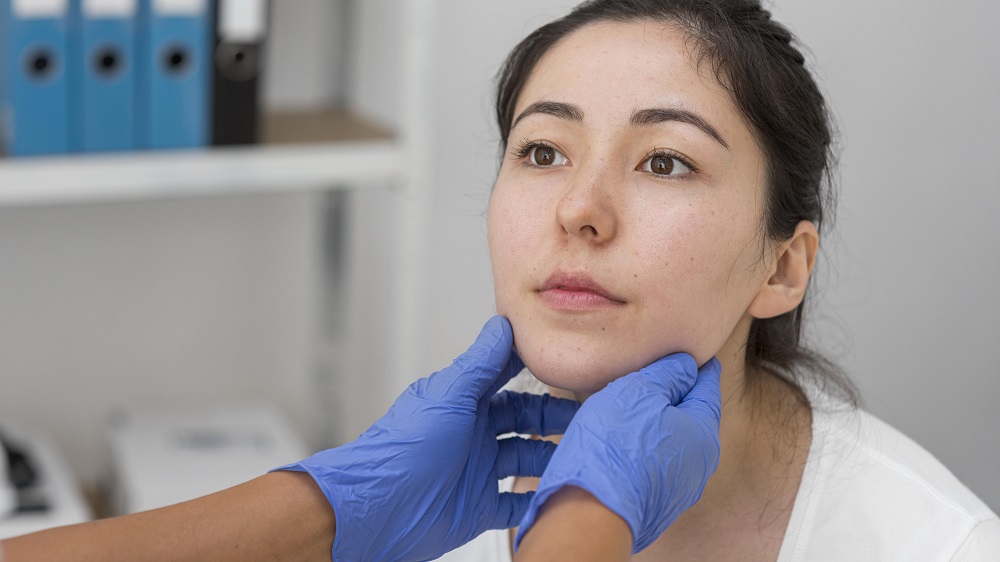
Jowls are simply sagging of the skin and soft tissue along the sides of the chin and jawline, and they’re one of the most common reasons people start researching a sagging jowl treatment in Cumming, GA, before considering anything surgical.
This article covers what actually causes jowls, which non-surgical treatments can realistically improve them, and, just as importantly, where non-surgical options reach their limit.
What Jowls Actually Are and Why They Form
A sharply defined jawline in younger adults comes from a specific combination of factors: firm skin, well-supported fat compartments, and strong underlying bone structure. Several changes disrupt that combination over time.
Collagen and elastin decline: As structural proteins break down, skin loses the firmness that once held the jawline in place.
Fat pad descent: The distinct fat compartments that give the midface its youthful contour shift downward with age rather than staying in their original position, adding visible fullness along the jaw rather than the cheek.
Bone remodeling: The jawbone gradually loses volume with age, reducing the structural foundation that the skin and soft tissues rely on for support.
Gravity: Once the structural support above starts to loosen, gravity does the rest, pulling tissue downward into the visible pockets recognized as jowls.
Repetitive habits compound these underlying changes; hours spent looking down at phones and laptops, cumulative sun exposure, and fluctuations in weight all contribute to how early and how visibly jowls appear.
Common Jowl Presentations
| Presentation | Primary Driver | Typical Best-Fit Treatment |
| Mild softening, early jawline blur | Early collagen decline | RF skin tightening |
| Moderate sagging with visible pockets | Combined collagen and fat pad shift | RF microneedling, sometimes with filler |
| Loss of jawline definition without much sagging | Volume loss along the jaw | Dermal filler for contour |
| Significant hanging tissue, excess skin | Advanced structural loss | Surgical consultation |
Not every jowl looks the same, which is why an accurate assessment, rather than a single default treatment, matters more here than almost anywhere else on the face.
Setting Realistic Expectations: Non-Surgical vs. Surgical
For very heavy jowls involving significant excess skin, a surgical facelift remains the most powerful option, since surgery physically removes and repositions tissue rather than relying on the body’s own collagen response. Non-surgical treatments work differently; they stimulate collagen production and add targeted volume, which produces real, visible improvement for mild to moderate jowls but cannot replicate the dramatic, immediate change of surgery.
This isn’t a reason to dismiss non-surgical options. It’s a reason to have an honest conversation about which jowl category a given patient actually has, since recommending months of energy-based treatment to someone who needs a surgical consult wastes both time and money.
RF Skin Tightening for Early Jowls
Radiofrequency (RF) skin tightening delivers controlled heat through a handpiece moved across the jawline and lower face, warming the collagen-rich layer beneath the skin without any needles or incisions. Once that layer reaches a specific temperature, existing collagen fibers contract slightly, and the body begins producing new collagen and elastin.
For jowls specifically, RF tightening is typically directed at loose skin along the jaw, early pocket formation near the corners of the mouth, and mild laxity under the chin that blurs the jawline’s edge.
What to expect: A warming sensation as the device passes over the treated area, with intensity adjusted to comfort. There’s no meaningful downtime; most people return to normal activity immediately, with only mild, temporary redness or warmth. A full course typically involves multiple sessions spaced weeks apart, and RF tightening tends to work best when jowls are just beginning to form and skin still has reasonable thickness. It’s less effective on more advanced jowls with significant excess tissue.
RF Microneedling for Moderate Jowls
When jowls involve more than mild softness, RF microneedling reaches deeper than surface-level RF alone. Fine, insulated needles enter the skin in a controlled pattern along the jaw and lower face, delivering radiofrequency energy directly through the needle tips into the deeper dermis. The device measures tissue feedback throughout treatment, adjusting energy so it reaches the intended depth consistently.
This combination, controlled micro-injury plus targeted heat, tends to produce a more noticeable lifting and firming effect along the jawline than surface RF alone, particularly for jowls that have progressed beyond the earliest stage.
What to expect: Numbing cream is applied before treatment, so most people describe the sensation as short, warm pinches rather than sharp pain. Redness and swelling for a couple of days afterward is standard, sometimes with mild flaking or a rough texture as the skin heals. Most jowl-focused plans involve 2 to 3 sessions spaced about a month apart, with visible tightening building over the following months as new collagen forms.
When Filler Belongs in a Jowl Treatment Plan
Not every jowl is purely a sagging problem; sometimes the jawline has lost definition because of volume loss rather than excess skin. In these cases, dermal filler placed strategically along the jawline or just in front of a jowl pocket can visually reshape the line and reduce the shadowing that makes jowls more noticeable. Filler doesn’t tighten loose skin, but it can meaningfully improve contour when volume loss, rather than laxity, is the dominant issue.
Filler and energy-based treatments are frequently combined: RF-based tightening addresses the skin’s structural quality, while filler refines the jawline.
Building a Jowl Treatment Plan
- Mild jowls, early softening: RF skin tightening alone is often sufficient, aimed at a firmer, subtly lifted jawline rather than a dramatic change.
- Moderate jowls with visible pockets: A stronger RF microneedling series, sometimes combined with RF tightening and filler for contour refinement.
- Volume-driven loss of definition without much sagging: Filler alone may address the concern without the need for any energy-based treatment.
- Significant jowling with excess skin: Non-surgical treatment may serve as a maintenance or “bridge” option, but a surgical consultation is the more honest recommendation.
A thorough consultation typically includes the provider gently assessing how much tissue can be moved and how elastic the skin feels, along with a look at the neck and under-chin area, since sagging there often changes how jowls appear from certain angles.
Safety and Side Effects
Both RF-based treatments used for jowls carry a generally strong safety record, though the recovery experience differs between them:
RF skin tightening:
- Redness, mild swelling, and temporary tenderness usually resolve within a day
- Rare risks, burns and pigment changes, are typically linked to incorrect settings or technique, not the treatment itself
RF microneedling:
- A somewhat more involved recovery: redness and swelling for several days, small surface scabs as micro-injuries heal, occasional dryness or flaking
- The fat-loss risk flagged by the FDA (Food and Drug Administration), specifically tied to overly aggressive energy settings
- Serious complications, such as infection or scarring, remain rare when the device is matched properly to skin type and thickness
A few situations call for avoiding or delaying jowl treatment altogether: active skin infections in the treatment area, certain autoimmune or connective tissue conditions, and very unstable underlying medical conditions. Screening for these factors during consultation is a standard and essential step before the treatment.
How Long Non-Surgical Jowl Results Typically Last
| Treatment | Early Change | Best Results | Typical Duration |
| RF skin tightening | First few weeks | Several months | Around a year with maintenance |
| RF microneedling | After the first session | 3-6 months as collagen matures | A year or more with periodic touch-ups |
| Dermal filler for contour | Immediate | Immediate | 6 months to 2 years, product-dependent |
A realistic jowl plan operates on a timescale of months and years, not days. Daily habits, maintaining a stable weight, consistent sunscreen use, and not smoking all help protect the collagen that these treatments work to rebuild.
Who Is a Good Candidate for Non-Surgical Jowl Treatment?
Non surgical treatment tends to work best for a specific range of presentations, and being upfront about that range leads to better outcomes than treating everyone the same way.
Good candidates typically have:
- Mild to moderate skin laxity along the jaw, without significant hanging tissue
- Reasonably healthy skin thickness, since very thin, over-stretched skin has less to work with
- Realistic goals centered on firming and gradual improvement rather than a dramatic, immediate transformation
Less ideal candidates for non-surgical treatment alone include:
- Patients with significant excess skin, where tightening existing tissue can’t compensate for the volume of extra skin present
- Patients who have already tried a full course of energy-based treatment without meaningful improvement
- Patients seeking immediate, dramatic change on a tight timeline, since collagen-based results build gradually over months
Final Thoughts
Jowls rarely stem from a single cause, which is why the treatment that worked for a friend or family member doesn’t always yield the same result for someone else. Collagen loss, shifting fat, bone changes, and gravity each play a different role, and figuring out which one is dominant is really the first step before any device or filler gets involved. Non-surgical options can do real, visible work for mild to moderate sagging, but they’re not a universal substitute for surgery, and a provider who says so plainly is doing you a favor.
FAQs
Q1. What’s the best non-surgical treatment for jowls?
Ans: Depends on severity. Mild jowls often respond to RF tightening; moderate jowls usually need RF microneedling, sometimes with filler.
Q2. Can RF skin tightening really lift sagging jowls?
Ans: It’s most effective for early-to-mild jowls. It tightens and firms but can’t remove significant excess skin on its own.
Q3. How many treatments will I need before seeing a difference?
Ans: Most people need a series, several RF tightening sessions or 2 to 3 RF microneedling sessions spaced about a month apart.
Q4. Are RF microneedling treatments safe?
Ans: Generally, yes, when performed by a trained provider, though the FDA has flagged fat-loss risk from overly aggressive treatment.
Q5. When should I consider a facelift instead of non-surgical treatment?
Ans: If jowls are pronounced with significant excess skin, or non-surgical treatment hasn’t produced meaningful change after a full course.