
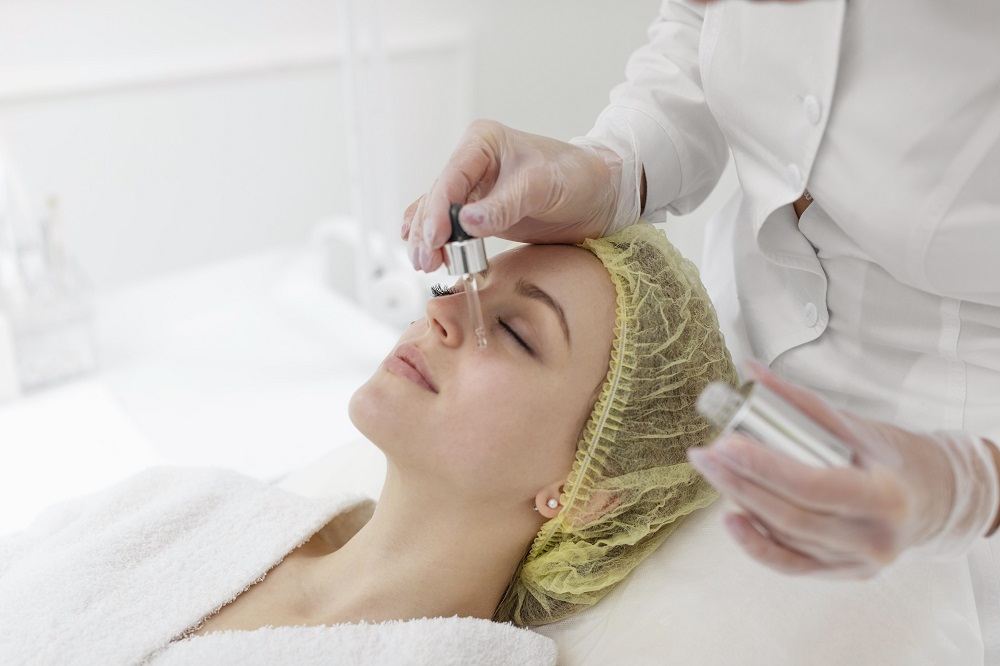
Non-surgical anti-aging treatments have moved from a niche cosmetic interest to a mainstream category of preventive skincare. The International Society of Aesthetic Plastic Surgery recorded more than 20.5 million non-surgical procedures performed worldwide, a 42.5% increase over four years, with botulinum toxin, dermal filler, skin tightening, and chemical peel ranking among the five most-performed categories.
This guide covers the clinical basis for skin aging, how non-surgical treatments compare to surgical ones, and how the major treatment categories address specific concerns: neck laxity, forehead lines, eye-area aging, jowls, and more.
It also covers provider selection, safety considerations, and cost factors, so readers can approach treatment decisions with a clear framework rather than guesswork. Let’s dive in!
Understanding Skin Aging: The Clinical Basics
Effective treatment selection starts with understanding why skin ages in the first place. Two separate processes are at work, and they don’t always progress at the same rate.
Intrinsic vs. Extrinsic Aging
Intrinsic aging is genetically programmed. Collagen production declines by roughly 1% per year starting in the mid-20s, and elastin, the protein responsible for skin’s ability to spring back into place, degrades at a similar pace. This process is consistent across individuals and cannot be stopped, only slowed.
Extrinsic aging results from external exposures: ultraviolet radiation, pollution, smoking, poor sleep, and repetitive facial movement. Dermatology research on photoaging attributes up to 80% of visible facial aging to extrinsic factors rather than genetics.
This distinction matters clinically because damage caused by extrinsic factors is often more responsive to treatment than the underlying intrinsic aging process.
Dynamic Lines vs. Static Lines
Wrinkles fall into two categories that require different treatment approaches:
- Dynamic lines form from repeated muscle movement, squinting, frowning, or raising the eyebrows, and are visible only during that movement. These respond well to neuromodulators, which reduce the underlying muscle contraction.
- Static lines remain visible even at rest because the skin’s structural support has broken down. These typically require volume restoration (fillers) or collagen-stimulating treatments (energy-based devices, microneedling) rather than muscle relaxation alone.
Volumetric Aging: Fat Pad Descent and Bone Remodeling
A third mechanism, distinct from wrinkle formation, involves the loss and redistribution of facial volume. The face contains distinct fat compartments that provide youthful contour; these compartments lose volume and shift downward with age, contributing to under-eye hollowing, cheek flattening, and deepening of the nasolabial folds. The underlying facial bone, particularly around the eye sockets and jawline, also undergoes gradual remodeling that reduces the structural support for the overlying skin.
This distinction matters for treatment selection. Wrinkle-focused treatments such as neuromodulators do not address volumetric loss, which is why many patients require filler or volumetric treatments in addition to, not instead of, muscle-relaxing injections. A treatment plan built around a single mechanism typically yields only partial results.
Collagen and Elastin Decline by Decade
| Age Range | Typical Collagen Status | Common Visible Signs |
| 20s | Peak production, gradual decline begins | Fine dynamic lines, minimal static change |
| 30s | Noticeable decline, roughly 15-20% cumulative loss | Early static lines, first volume loss in cheeks |
| 40s | Accelerated decline, further loss compounding | Jowl formation, deeper nasolabial folds |
| 50s and beyond | Substantial cumulative loss | Skin laxity, marked volume loss, and bone remodeling |
Non-Surgical vs. Surgical: Comparing the Two Paths
| Factor | Non-Surgical Treatments | Surgical Treatments |
| Downtime | Hours to a few days | Weeks to months |
| Cost structure | Lower per session, recurring | Higher upfront, largely one-time |
| Onset of results | Days (injectables) to months (collagen-based) | Immediate, post-recovery |
| Longevity | Months to roughly two years, requires maintenance | Years to decades |
| Risk profile | Low, with minor and temporary side effects | Higher, involving anesthesia and surgical recovery |
| Best suited for | Early to moderate aging signs, prevention | Advanced sagging, significant volume loss |
Surgical procedures remain appropriate for advanced skin laxity and volume loss that injectables and energy-based devices cannot fully address.
For early to moderate signs of aging, however, non-surgical options frequently produce results within an acceptable range for most patients, often used continuously over years to delay or reduce the need for surgical intervention. The decision between the two paths typically depends less on age and more on the degree of structural change already present, a factor best assessed during an in-person consultation rather than estimated from photos or self-assessment alone.
The Five Core Categories of Non-Surgical Anti-Aging Treatments
Nearly every non-surgical treatment falls into one of the following categories.
Neuromodulators
Botox, Dysport, Xeomin, and Jeuveau work by temporarily reducing the activity of muscles responsible for dynamic wrinkles. Because the underlying muscle contraction is what creates the crease, relaxing that muscle softens the line without altering the skin’s structure. Visible results typically appear within 3 to 7 days and last 3 to 4 months. Common treatment areas include the forehead (frontalis muscle), the glabellar region between the brows, and the crow’s feet at the outer corner of the eyes.
Dermal Fillers
Hyaluronic acid and other injectable gels restore volume in areas affected by fat pad loss or structural change. Where neuromodulators address movement-based lines, fillers address the physical loss of support beneath the skin. Depending on the product and treatment area, results last 6 months to 2 years. Common applications include the cheeks, under-eye hollows, nasolabial folds, lips, and jawline.
Energy-Based Devices (Radiofrequency, Laser, Ultrasound)
These devices deliver controlled thermal energy to deeper skin layers, stimulating new collagen production without disrupting the surface. Ultrasound-based treatments such as Ultherapy can reach depths of up to 4.5mm, targeting the same structural layer addressed in surgical facelifts, and clinical data have shown a measurable increase in Type I and III collagen following treatment. Results build gradually over 2 to 6 months as new collagen forms.
RF Microneedling
This combines fine needles with radiofrequency energy to create controlled micro-injuries at the surface while delivering heat to the dermis. A survey found that 73% of dermatologists and plastic surgeons identified RF microneedling as their preferred non-invasive skin-tightening method, ahead of laser and chemical peel options. Most protocols require 3 to 6 sessions spaced 4 to 6 weeks apart, with results developing over several months and typically lasting 6 to 12 months.
Chemical Peels and Resurfacing
Peels remove damaged outer layers of skin to improve tone, texture, and pigmentation, encouraging fresher skin to surface. Peel strength ranges from light (minimal downtime) to deeper formulations addressing sun damage and stubborn discoloration. This category is often the most accessible entry point for patients new to professional treatment.
Why These Categories Are Frequently Combined
Each category addresses a different mechanism of aging: neuromodulators target muscle movement, fillers target volume loss, and energy-based devices.
Microneedling targets collagen depletion and skin laxity. Because these mechanisms occur simultaneously as a person ages, single-category treatment plans often leave visible concerns unaddressed.
A neuromodulator alone will not restore volume; a filler alone will not soften dynamic lines caused by muscle movement.
Treatment Options by Concern
The sections below outline how the categories above apply to specific, commonly searched concerns.
Neck and Décolletage Tightening
Skin on the neck and chest is thinner than facial skin and carries less underlying fat, which means visible aging often appears here before it appears on the face. RF microneedling and ultrasound-based treatments (Ultherapy) are the primary non-surgical options for this area, since both stimulate collagen in a region with limited natural structural support.
RF microneedling tends to produce visible improvement more quickly, while ultrasound treatments generally reach deeper tissue layers in a single annual session. A full comparison of what works best for neck and décolletage concerns is covered in a dedicated article.
Forehead Lines and Natural-Looking Results
Horizontal forehead lines form from repeated contraction of the frontalis muscle, the only muscle responsible for lifting the eyebrows. This makes dosing particularly delicate: insufficient product leaves visible lines, while excessive product can cause brow drop or a flattened, expressionless appearance.
Clinical dosing guidance typically places forehead treatment in the 10 to 30-unit range, adjusted for muscle strength and desired brow position, with the upper third of the forehead generally considered the safest injection zone. A separate article details how a measured, anatomy-based approach produces natural results in this area.
Crow’s Feet, Droopy Lids, and Puffy Eyes
The periorbital area has the thinnest skin on the body, making it especially prone to early fine lines, fatigue-related puffiness, and laxity. Crow’s feet, a dynamic concern, typically respond well to low-dose neuromodulator treatment placed in the orbicularis oculi muscle.
Puffiness and lid heaviness, by contrast, are often related to fluid retention or fat pad position rather than muscle movement, and require a different treatment approach entirely. This distinction is covered in detail in a dedicated article.
Jowls and Sagging Skin
Jowl formation occurs when skin and connective tissue along the jawline lose structural support, allowing gravity-driven descent to become visible. For mild to moderate cases, a combination of RF skin tightening, targeted filler to re-establish jawline definition, and collagen-stimulating microneedling can produce a measurable improvement without surgical intervention.
The extent to which non-surgical options can address this concern, and when a surgical consultation becomes appropriate, is addressed in a separate article.
Extending Results Between Appointments
Treatment outcomes are influenced significantly by what happens between sessions. Sun protection, consistent topical skincare, hydration, and sleep quality all affect how long results hold and how quickly new damage accumulates. A dedicated article outlines a maintenance routine designed to extend the value of professional treatment.
Which Treatments Show Results Fastest
Timelines vary considerably by treatment category. Neuromodulators show visible change within days, while collagen-based treatments require weeks to reveal their full effect. A separate comparison ranks treatment options by speed of visible results, for readers working with time constraints.
The Shift Toward Preventive Treatment
A measurable trend in aesthetic medicine is that patients are beginning treatment earlier, often in their late 20s and early 30s, with the goal of delaying the onset of visible aging rather than correcting it after the fact. This approach, sometimes referred to as prejuvenation, uses lower product doses applied before deep static lines develop.
Data from the American Society of Plastic Surgeons show that minimally invasive injectable procedures outpaced growth in surgical procedures in 2024, with neuromodulator use increasing by approximately 4% that year alone. A growing share of this volume reflects younger patients using smaller, preventive doses rather than treating established wrinkles. Clinical literature on early-stage botulinum toxin use suggests that consistent, lower-dose treatment may reduce the eventual severity of dynamic wrinkles by limiting repetitive muscle contraction over time.
This trend does not establish a required age to begin treatment. Patients starting in their 40s, 50s, or later continue to see substantial results; the distinction is between preventive and corrective treatment goals, not a fixed timeline. Providers typically adjust dosing and treatment frequency based on which goal a patient is pursuing, since preventive protocols generally use smaller amounts of product applied less frequently than corrective ones.
Evaluating a Provider
Treatment outcomes depend heavily on provider skill, not solely on the product or device used. The same neuromodulator or filler, injected by two different providers, can produce meaningfully different results based on dosing precision, injection depth, and anatomical assessment.
Credentials and Training
Confirm who will be performing the treatment and their specific training for the requested procedure. Injectable and energy-based treatments require anatomical knowledge that varies significantly with provider experience level, and not all licensed staff have the same depth of training across all treatment categories. Requesting information on a provider’s specific certification for the treatment being considered, rather than a general license, is a reasonable step before booking.
At Windermere MedSpa in Cumming, GA, treatment plans are developed under the direction of Dr. Priya Bayyapureddy, MD, with dosing and technique customized to individual facial anatomy rather than applied as a standardized protocol.
The Consultation Process
A thorough consultation should include a review of the patient’s specific concerns, an assessment of the relevant facial anatomy, and a clear explanation of expected timelines and limitations.
It should also address realistic outcomes for the patient’s specific anatomy rather than presenting a generic result. Requesting before-and-after examples from patients with comparable concerns is reasonable and common, and a provider’s willingness to walk through those examples in detail is often a useful indicator of experience.
Post-Treatment Follow-Up
Providers who conduct follow-up contact after treatment to confirm that healing is progressing normally and to address any concerns before they escalate are generally associated with higher patient satisfaction and lower complication rates. This is a useful, low-effort criterion when comparing providers, and one that’s easy to confirm during an initial consultation.
Safety Profile and Contraindications
Non-surgical treatments carry a strong overall safety record when performed by trained providers using FDA-approved products.
Common Side Effects
Serious adverse events from neuromodulator injections occur in fewer than 0.1% of cases when the injections are performed by a trained provider using an FDA-approved product. Most side effects across treatment categories are minor and temporary.
| Treatment Category | Common Side Effects | Typical Duration |
| Neuromodulators | Bruising (2-5% of patients), mild headache | 1-3 days |
| Dermal fillers | Swelling, tenderness, minor bruising | 3-7 days |
| RF microneedling | Redness, mild swelling, pinpoint bleeding | 1-3 days |
| Energy-based devices | Temporary redness, mild tingling | Hours to 1 day |
| Chemical peels | Flaking, redness, mild sensitivity | 2-5 days |
Who Should Avoid These Treatments
Certain groups require modified treatment plans or should avoid specific procedures altogether, including individuals who are pregnant or breastfeeding and those with specific neuromuscular or autoimmune conditions. A pre-treatment consultation is the appropriate setting to determine individual eligibility, since these factors vary by treatment type and cannot be generalized.
Cost Considerations
Cost is the primary hesitation factor for approximately one in four consumers considering a cosmetic procedure, according to ASDS research. Pricing structures vary by treatment category:
| Treatment | Typical Pricing Model | Primary Cost Factors |
| Neuromodulators | Priced per unit | Treatment area, unit count, product selected |
| Dermal fillers | Priced per syringe | Product type, volume required, injection site |
| RF microneedling | Priced per session | Session count, treatment area, device type |
| Laser resurfacing | Priced per session or package | Laser type, treatment depth, area size |
| Chemical peels | Priced per session | Peel strength, add-on treatments |
| HydraFacial | Priced per session | Add-on boosters, membership pricing |
A single-session price rarely reflects the full cost of an effective treatment plan, since most categories require an initial series rather than one visit. Requesting the total projected cost of a recommended plan, rather than the price of the first appointment alone, is standard practice for informed decision-making. Windermere MedSpa offers seasonal promotions and membership pricing that can reduce the cost of ongoing maintenance treatments.
Final Thoughts
Most patients achieve the strongest results by combining treatment categories rather than relying on a single option. A neuromodulator addressing dynamic lines, paired with RF microneedling for overall skin quality, commonly outperforms either treatment used in isolation, since each targets a different underlying cause of visible aging. Establishing a plan begins with identifying the primary concern- volume loss, dynamic lines, skin laxity, or texture- and selecting the treatment category built to address it, with adjustments made over time based on results and how the skin responds.
Patients in the Cumming, GA, area can schedule a consultation with Windermere MedSpa to develop a treatment plan based on individual anatomy, skin condition, and treatment goals.
FAQs
Q1. Is non-surgical anti-aging treatment clinically effective, or primarily cosmetic marketing?
Ans: Clinical data confirm measurable collagen production and wrinkle reduction from these treatments, though results and mechanisms vary by category.
Q2. At what age should treatment begin?
Ans: There is no required starting age. Many begin in their late 20s for prevention; others start later to correct established signs.
Q3. How long do results typically last?
Ans: Neuromodulators last 3-4 months. Fillers last 6 months to 2 years. Energy-based treatments require ongoing maintenance sessions.
Q4. Can multiple treatment types be combined in one visit?
Ans: Yes. Neuromodulators, fillers, and energy-based devices are frequently combined for more complete results.
Q5. Is significant pain or downtime expected?
Ans: Most treatments involve mild discomfort, often reduced with topical numbing, with downtime measured in hours rather than weeks.