
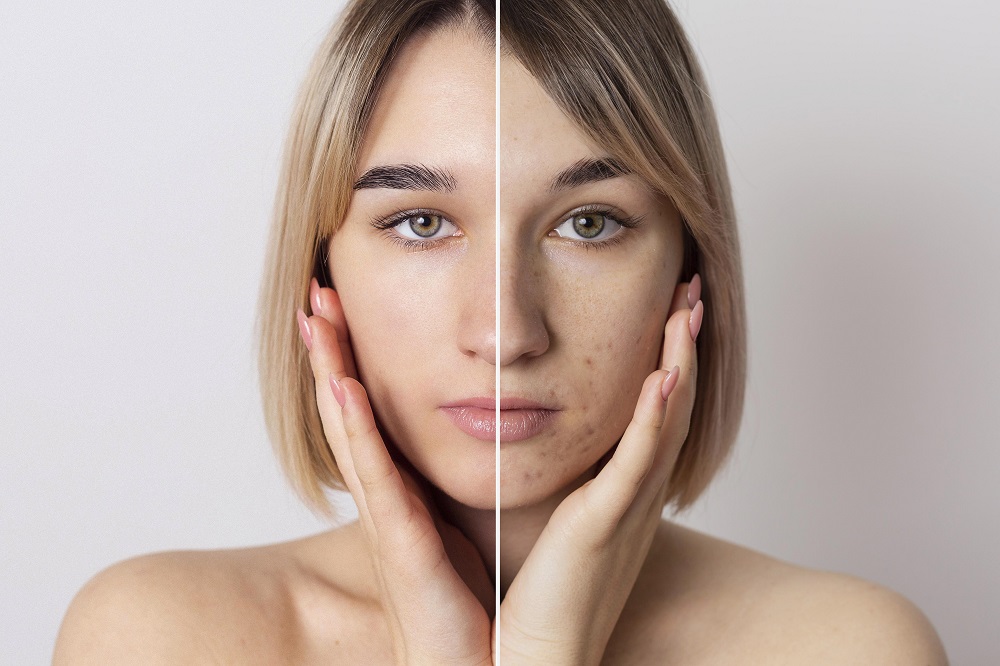
Brown or gray-brown patches across the cheeks, forehead, or upper lip that seem to deepen every summer and fade, but never fully disappear, every winter. That’s melasma, and it’s one of the most frustrating skin conditions to manage, mostly because it doesn’t respond the way people expect. More sunscreen helps, but doesn’t fix it. Brightening serums fade it slightly, then it comes back.
This guide covers what melasma actually is, why it’s so stubborn, and which melasma treatment Cumming, GA options have real evidence behind them, including the honest risks of laser treatment that a lot of local providers gloss over.
What Is Melasma?
Melasma is a chronic pigmentation disorder. Pigment-producing cells in the skin, melanocytes, become overactive in specific areas, producing excess brown or gray-brown pigment that clusters into visible patches.
It typically shows up on:
- The cheeks
- The forehead
- The bridge of the nose
- The upper lip
- The chin
Note: Melasma is not the same as a sunspot or an age spot. Sunspots are small, isolated, and caused directly by cumulative sun exposure. Melasma is a broader, patchier condition tied to a functional shift in how pigment cells behave, which is exactly why it needs a different treatment approach.
What Causes Melasma?
Melasma is considered multifactorial, meaning several things typically need to line up for it to develop or flare.
The Three Main Triggers
- UV and visible light exposure, even light coming through a car window or an office window can contribute.
- Hormonal shifts, pregnancy, birth control pills, and hormone replacement therapy are all well-documented triggers.
- Heat, not just sun, but heat exposure in general (saunas, hot yoga, even standing over a hot stove) can worsen it in some people.
Why heat matters as much as sun: Melasma-affected skin often has more blood vessels close to the surface than surrounding skin. Those vessels carry heat and inflammatory signals straight to the overactive pigment cells beneath, which is why melasma can flare after a workout, a spicy meal, a glass of wine, or a sauna session, independent of any sun exposure at all.
Who’s Most at Risk
- Women, especially between ages 20 and 40; men account for a small minority of cases
- People with medium to deeper skin tones
- Anyone with a family history of melasma
- Pregnant women
Is Melasma During or After Pregnancy Different?
Pregnancy-related melasma, medically known as chloasma, follows its own set of rules and its own timeline.
What Makes Chloasma Different
An estimated 50-70% of pregnant women develop some degree of chloasma, driven by the sharp rise in estrogen and progesterone that pregnancy brings. For many, it fades on its own within three to twelve months after delivery, as hormone levels normalize.
Pregnancy & Breastfeeding Safety Note: Hydroquinone, tretinoin, and other retinoids, higher-strength chemical peels, and laser treatment are generally not recommended during pregnancy or while breastfeeding, since absorption and pigment response can be unpredictable during this time.
If you’re pregnant, trying to conceive, or breastfeeding, talk with your OB-GYN and a board-certified dermatologist before starting any melasma treatment, including at a med spa. A provider who skips this conversation isn’t looking out for you.
Safer topical options during pregnancy and breastfeeding generally include vitamin C, azelaic acid, niacinamide, and mineral sunscreen, but these should still be confirmed with your OB-GYN, since individual circumstances vary.
How Common Is Melasma?
Melasma is far more common than most people assume:
- Recent research estimates 5 to 6 million women in the U.S. are affected by melasma.
- Melasma most commonly begins between the ages of 20 and 40.
- Chloasma, its pregnancy-related form, affects an estimated 50-70% of pregnant women.
Why this matters: if melasma feels like a condition nobody around you is talking about, the data says otherwise. It’s common; it’s just not always visible in casual conversation, since most people cover it with makeup rather than discuss it.
Why Is Melasma So Hard to Treat?
This is the part most people aren’t told upfront: melasma has a high recurrence rate, even after successful treatment. A 2026 review of melasma research described it as a condition with a “propensity for recurrence” that remains resistant to a single standardized treatment protocol, regardless of how advanced the technology used.
That doesn’t mean treatment isn’t worth pursuing. It means the goal shifts from cure to long-term management, similar to how conditions like rosacea or eczema are managed rather than eliminated outright.
Laser Toning for Melasma: What It Can Do, and What It Can’t
Laser toning uses low-heat, multi-pass Q-switched Nd: YAG lasers to safely break down excess melanin.
How It Works
Low-fluence Q-switched Nd: YAG laser, sometimes called laser toning, delivers gentle, sub-threshold energy at a 1064nm wavelength across multiple passes. The goal is to gradually reduce melanin without the higher-heat, higher-intensity approach that older, more aggressive lasers used, since that intensity is exactly what can trigger a melasma flare. This gentler mechanism is what Windermere’s Laser C Toning service is built around.
The Evidence of Benefit
A systematic review covering 42 studies found low-fluence laser toning to be generally effective and safe compared to older conventional therapies, with multiple trials reporting 50-74% improvement in standard pigmentation scoring across a course of weekly sessions.
What Reduces the Risk
Combination approaches, laser toning paired with topical maintenance therapy, show better long-term stabilization and lower relapse than laser alone. Provider experience and conservative, low-fluence settings matter more to the outcome than the specific device used.
Melasma Treatment Options That Actually Work
Research consistently shows combination approaches outperform single treatments. Here’s how the main options break down:
| Treatment | What It Does | Notes |
| Tinted, iron-oxide mineral sunscreen | Blocks visible light, not just UV | The single most important daily habit, most generic SPF advice misses this |
| Topical brightening agents | Slows pigment production | Provider-guided; often the first line of treatment |
| Chemical peels (e.g., VI Peel) | Exfoliates pigmented surface cells | Needs to be gentle, aggressive peels can backfire |
| Pigmented lesion treatments | Targets isolated spots within a broader melasma pattern | Best suited to melasma-specific settings, not generic pigment removal |
| Low-fluence laser toning (Laser C Toning) | Gradually reduces melanin over multiple sessions | Generally third-line, used after or alongside topical therapy |
| Microneedling | Supports absorption of brightening actives | Often paired with topical treatment, not used alone |
Why Regular Sunscreen Isn’t Enough for Melasma?
This is the biggest gap in most melasma advice: melasma responds to visible light, not just UV rays, and standard SPF 30 or 50 sunscreen is formulated to block UV, not the high-energy visible light (HEVL) that comes from daylight itself, screens, and indoor lighting.
Tinted mineral sunscreens containing iron oxide are formulated to block that visible-light spectrum, attenuating 93-98% of high-energy visible light compared to little to none from a non-tinted formula.
In clinical research, tinted iron-oxide sunscreen paired with topical hydroquinone produced meaningfully better pigmentation improvement than UV-only sunscreen with the same treatment, 77.8% versus 61.9% on standard pigmentation scoring.
Practical takeaway: If a sunscreen doesn’t leave a slight tint, it’s probably not protecting against the light that drives melasma. Daily application, reapplication every two hours outdoors, and pairing it with a wide-brimmed hat during peak UV hours all matter, but the tint is the detail worth checking on the label.
A Quick Word on At-Home Treatment
Over-the-counter brightening products can help maintain results between professional visits, but they rarely resolve melasma on their own. Melasma sits deeper in the skin than surface pigmentation, which is part of why in-office treatment tends to outperform drugstore products for this specific condition.
Common Mistakes That Undo Melasma Progress
A few patterns show up repeatedly in melasma cases that seem to get worse instead of better:
- Skipping sunscreen on cloudy or indoor-heavy days: Visible light from windows and screens still reaches and triggers pigment, even without direct sun
- Reapplying sunscreen only once in the morning, rather than every two hours outdoors
- Choosing aggressive, high-heat resurfacing or peels without provider guidance, chasing faster results
- Over-treating during an active flare, which tends to add inflammation on top of inflammation
- Ignoring heat triggers, sauna, hot yoga, high-heat cooking, while otherwise doing everything else right
- Stopping maintenance treatment too early once pigmentation looks mostly clear, which is one of the most common reasons melasma returns quickly
- Starting hydroquinone, retinoids, or laser treatment while pregnant or breastfeeding without medical guidance first
What Treatment Looks Like at Windermere MedSpa?
Because melasma responds poorly to aggressive, one-size-fits-all treatment, medical oversight matters more here than with most other skin concerns. At Windermere MedSpa, treatment plans for melasma are developed under the guidance of Dr. Priya Bayyapureddy, MD, a detail that matters given how easily the wrong laser setting or overly intensive peel can worsen pigmentation instead of improving it.
The practice’s approach typically starts conservatively:
- An initial consultation to assess how deep the pigmentation sits and identify likely triggers
- Pigmented Lesion Treatment and gentle chemical peels, including the VI Peel, used as a starting point rather than the most aggressive laser available
- Laser C Toning introduced later in the plan for clients whose pigmentation hasn’t responded fully to topical care, positioned as one part of an ongoing plan, not a standalone quick fix
- A sun-protection plan built into the treatment protocol from day one, not treated as an afterthought
Ongoing Care and Local Considerations
Melasma management doesn’t stop after the first few sessions. Windermere MedSpa works with clients on a longer-term basis, adjusting treatment intensity seasonally, since Georgia’s long, high-UV summer months are exactly when melasma tends to flare hardest, even with consistent sunscreen use.
Clients coming from Cumming and the surrounding Alpharetta, Milton, Sugar Hill, Duluth, Lawrenceville, Suwanee, and Canton communities often find that this kind of seasonal adjustment, rather than a single fixed protocol, is what finally keeps their pigmentation under control year-round.
Melasma vs. Other Pigmentation Issues
Melasma often gets confused with other pigmentation concerns, but the distinction changes what treatment actually works.
How to Tell Them Apart
| Condition | Pattern | Typical Cause |
| Melasma | Symmetric, patchy, often on both cheeks | Hormones + UV + heat |
| Sunspots (solar lentigines) | Small, defined, scattered | Cumulative sun exposure |
| Post-inflammatory hyperpigmentation | Follows the exact shape of an old breakout or injury | Healing response after inflammation |
Why this matters: treating melasma like a sunspot, with an aggressive, single-pass laser, is one of the most common reasons treatment backfires. A proper assessment before treatment isn’t a formality; it changes the entire protocol. For pigmentation caused purely by sun exposure rather than hormones, our guide to sun-damaged skin treatment covers a different, and generally more straightforward, treatment path.
What to Expect During a Melasma Treatment Session
For anyone who hasn’t been through professional pigmentation treatment before, knowing what a session actually involves can ease some of the uncertainty.
Most visits start with a consultation and, often, a Wood’s lamp assessment to gauge how deep the pigment sits, followed by a patch test, especially important for melasma, since this skin type is prone to reacting unpredictably to new treatments.
The treatment itself, whether a chemical peel, low-fluence laser session, or pigmented lesion treatment, is usually short, often under an hour, with strict sun-avoidance guidance for the days that follow.
Mild redness or slight darkening in the first day or two is normal and typically settles before the skin shows visible improvement.
Final Thoughts
Melasma isn’t a condition to fix once and forget, it’s a condition to manage carefully, with the right combination of sun protection, targeted treatment, and patience. A realistic goal isn’t pigment gone forever, it’s pigment significantly reduced and kept under control through consistent, ongoing care.
That distinction, uncomfortable as it can be to hear at first, tends to lead to far better long-term satisfaction than chasing a permanent fix that current dermatology research simply doesn’t support.
Ready to talk through a plan? Windermere MedSpa offers in-person and virtual melasma consultations for patients throughout Cumming, Alpharetta, Milton, Sugar Hill, Duluth, Lawrenceville, Suwanee, and Canton.
Call (470) 570-6727 to book an assessment.
FAQs
Is laser treatment effective for melasma in Cumming, GA?
Gentle, low-fluence laser toning can help, but aggressive resurfacing lasers often worsen melasma. Treatment selection matters significantly.
Can melasma be fully cured?
Not typically. Melasma is managed long-term rather than permanently cured, similar to other chronic pigmentation and inflammatory skin conditions.
Is laser toning safe for all skin tones?
It can be, with conservative settings and an experienced provider. Aggressive settings carry higher risk of hypopigmentation on deeper skin tones.
How is melasma different from sun spots?
Melasma is symmetrical, patchy, and hormonally driven. Sun spots are small, well-defined, and caused purely by cumulative UV exposure.
Is it safe to treat melasma while pregnant or breastfeeding?
Many standard treatments aren’t recommended during this time. Always consult your OB-GYN and a dermatologist before starting treatment.
How soon will I see results from melasma treatment?
Improvement is usually gradual over several sessions. Rushing treatment intensity often increases the risk of flare-ups.