
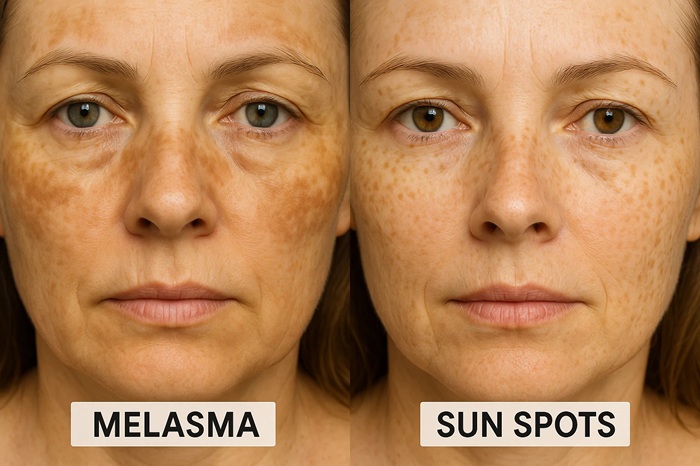
Dark spots and hyperpigmentation are common skin concerns that many individuals face. Understanding these conditions’ nature is crucial as it influences the choice of appropriate treatments for skin healing and aesthetic improvement. Two primary skin pigmentation issues are melasma and sun spots, each requiring a unique approach for management and treatment.
What is Melasma?
Melasma is a chronic skin disorder characterized by symmetrical, brown-gray patchy hyperpigmentation. It commonly affects areas like the cheeks, bridge of the nose, forehead, upper lip, and jawline. The primary triggers for melasma include hormonal fluctuations often seen during pregnancy, excessive heat, sun exposure, and genetic predisposition. Women and individuals with medium-to-dark skin tones are at higher risk.
What are Sun Spots?
Commonly known as solar lentigines, age spots, or liver spots, sun spots are primarily attributed to long-term sun and UV exposure. They typically appear as flat, round, and distinctly defined dark or light brown spots. Sun spots are prevalent in sun-exposed areas such as the face, hands, chest, shoulders, and arms, and become more common with age due to cumulative UV damage.
Key Differences – Melasma vs Sun Spots
Feature
Melasma
Sun Spots
Main cause
Hormonal + UV + heat
UV exposure only
Appearance
Patchy + symmetrical
Round, small isolated spots
Location
Face center areas
Sun-exposed areas (face/hands)
Treatment difficulty
Harder to treat
Easier to lighten
Triggers
Pregnancy, birth control
Sun damage over time
How Skin Specialists Diagnose
To accurately diagnose these conditions, dermatologists use techniques such as the Wood’s lamp test and dermatoscope evaluation. Reviewing medical history and hormonal factors also plays a crucial role in determining the underlying cause of pigmentation.
The Best Treatments for Each Condition
Melasma Treatment Options
- Low-energy laser / C-Toning
- VI Peel / Gentle chemical peels
- Microneedling combined with tranexamic acid
- Topical creams containing hydroquinone or tretinoin
- Consistent use of SPF and heat protection
Note: Incorrect laser treatment can worsen melasma, hence an expert dermatologist’s guidance is essential.
Sun Spot Removal Options
- Laser Resurfacing / IPL treatments
- Cryotherapy
- Chemical peels
- Topical products with retinoids and Vitamin C
The damage caused by sun spots is superficial, making them more responsive to rapid treatment options.
Prevention Tips for Long-Term Results
- Use broad-spectrum sunscreen with SPF 30–50+
- Opt for mineral sunscreen particularly effective for melasma management
- Ensure blue light protection
- Avoid sun exposure during peak hours
- Wear hats and protective clothing
When to See a Dermatologist
If you notice spots spreading or changing rapidly, or if over-the-counter solutions remain ineffective, consult with a dermatologist. Further, if melasma exacerbates due to hormonal changes, a personalized aesthetic treatment plan may be required.
Conclusion
Accurate diagnosis is the key to successful treatment of skin pigmentation. By recognizing whether you have melasma or sun spots, you can pursue the most effective treatments and maintain results by protecting your skin. Consulting with a skin specialist ensures an accurate diagnosis, leading to healthier, even-toned skin.
FAQs
Q1: Can sun spots turn into cancer?
A: Most are harmless, but atypical dark spots should be checked by a doctor.
Q2: Does melasma ever completely go away?
A: It can improve significantly but may return with hormonal triggers.
Q3: Can sunscreen treat melasma and sun spots?
A: It prevents worsening; treatment still required for fading.
Q4: Are lasers safe for melasma?
A: Yes, with proper settings — wrong lasers can worsen discoloration.
Q5: What is the fastest treatment for sun spots?
A: Laser resurfacing shows quick visible results.