
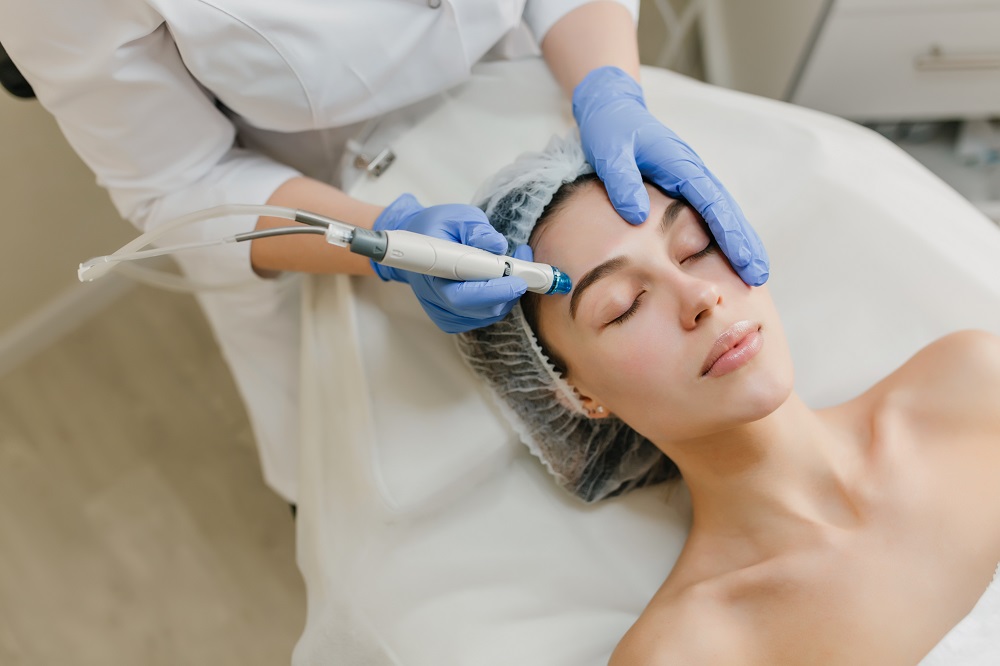
“Fastest” anti ging treatment results mean different things depending on what’s actually being asked. Someone with a wedding in ten days needs a different answer than someone who wants the quickest route to smoother skin over the next few months.
This question comes up often enough, from Cumming as well as patients traveling from Canton for a specific event, that having a clear framework matters more than a single “here’s the fastest treatment” answer. This article breaks down realistic timelines by treatment category, by specific concern, and by how far out an event actually is, since the practical answer changes depending on the question underneath it.
Why Fastest Isn’t the Same as Best for Everyone
Before comparing timelines, it’s worth separating two different goals that often get lumped together under “fast results.”
Immediate Cosmetic Refresh: A glow, smoother texture, and reduced puffiness can often be achieved same-day or within a few days, with treatments like HydraFacial, light chemical peels, or laser facials.
Structural Improvement: Smoothed wrinkles, tightened skin, restored volume, takes longer, because it depends on either a biological process (collagen remodeling) or a product settling into place (filler, neuromodulator).
Confusing these two categories is where a lot of pre-event disappointment comes from: booking a slow-acting treatment three days before an event, or a fast-acting one three months before, when the timeline should have run the other way.
Treatment Speed Comparison
| Treatment | Time to Initial Visible Change | Time to Full Result |
| HydraFacial / hydrating facial | Immediate | Immediate, temporary (days) |
| Light chemical peel | 1-3 days (post-flaking glow) | Days |
| Neuromodulator (Botox, Dysport) | 3-5 days | 2 weeks |
| Dermal filler | Immediate, with swelling | 1-2 weeks (once swelling resolves) |
| Laser skin tightening | Days | Weeks |
| RF microneedling | 2-4 weeks | 3-6 months |
| Deeper chemical peel | 1-2 weeks (post-peeling) | 2-4 weeks |
A useful pattern here: treatments that work by removing or refreshing the surface (facials, light peels) show change almost immediately but fade quickly. Treatments that work by relaxing muscle or adding volume (neuromodulators, filler) take one to two weeks to fully settle but hold for months.
Treatments that rebuild collagen (RF microneedling, laser) take the longest to show full results but tend to last the longest as well. Speed and duration generally trade off against each other, a pattern worth keeping in mind any time a treatment is marketed as both “instant” and “long-lasting”.
Fastest Option by Specific Concern
Different concerns have different “fastest realistic” answers, which is often more useful than a single overall ranking.
- Dull, Tired-Looking Skin: A HydraFacial or light peel gives same-day-to-next-day brightness with essentially no downtime. This is the closest thing to a genuine quick fix in this entire category, though the effect is temporary and typically needs repeating every few weeks to maintain.
- Dynamic Wrinkles (forehead lines, crow’s feet): A neuromodulator is the fastest structural fix, visible within 3 to 5 days and fully settled by two weeks. This is usually the better answer than reaching for a device treatment when the concern is specifically movement-related lines.
- Hollow or Flat-Looking Areas (cheeks, under-eyes): Dermal filler shows immediate volume, though final shape is best judged after swelling resolves over 1 to 2 weeks. Same-day photos rarely reflect the true final result.
- Overall Skin Quality and Texture: RF microneedling is the slowest of the commonly used options but produces the most comprehensive improvement in skin thickness and texture over several months.
- Sagging or Laxity: Laser or RF-based skin tightening shows gradual improvement over weeks, with no genuinely fast non-surgical option for significant laxity. Anyone promising a fast fix for true skin laxity is describing something a non-surgical treatment can’t deliver.
What Determines How Fast Results Show Up for You Specifically
The timelines above are averages, not guarantees. A few individual factors shift where someone falls within a given range.
- Metabolism: Faster metabolic rates tend to process neuromodulators somewhat faster, which can mean quicker onset but also a slightly shorter overall duration.
- Muscle mass and strength: Stronger facial muscles, more common in men, sometimes take a few extra days to show the full effect of a neuromodulator, since more product activity is needed to visibly reduce a stronger contraction.
- Skin thickness and baseline collagen levels: Thinner, more sun-damaged skin sometimes shows RF microneedling results slightly faster in early sessions, simply because there’s more room for visible improvement, though total treatment time to reach a stable result doesn’t necessarily shorten.
- Product and device selection: Not all products within a category behave identically; Dysport’s slightly faster average onset compared to Botox is a well-documented example within the neuromodulator category itself.
- Consistency with aftercare: Skipping sun protection or reintroducing active ingredients too early can slow visible progress after collagen-based treatments, effectively working against the treatment’s own timeline.
None of these factors changes the broad category timelines dramatically, but they explain why two people getting the same treatment sometimes describe noticeably different experiences of how fast it worked.
Combining Treatments for a Faster Overall Outcome
For patients who aren’t working around a single hard deadline, combining treatment categories often produces a faster overall sense of visible change than waiting for one treatment to fully mature before starting another.
A common approach: starting an RF microneedling series early, since it has the longest runway to results, while adding a neuromodulator partway through once dynamic lines are the more pressing concern. This layered approach means something is visibly improving at nearly every stage of the plan, rather than a single long wait followed by one big reveal.
It also means the “fastest” treatment in a broader plan isn’t necessarily the first one started; it’s often the one added partway through once the slower treatment already has momentum.
The Event-Prep Timeline
For anyone timing treatment around a specific date, a wedding, reunion, milestone birthday, working backward from the event matters more than picking the fastest treatment in isolation.
| Timing Before Event | What to Consider |
| 3+ months out | RF microneedling series, laser resurfacing, or any treatment requiring multiple sessions |
| 6-8 weeks out | Neuromodulator treatment (allows time for a touch-up if needed) |
| 3-4 weeks out | Dermal filler, allowing full settling and swelling resolution |
| 1-2 weeks out | Light chemical peel, provided skin has no reaction sensitivity |
| 2-3 days out | HydraFacial or hydrating facial only, nothing that could cause redness, swelling, or bruising |
| Day of | No new treatments; this is not the time to try something new |
Why Faster Isn’t Always Safer
There’s a natural pull toward compressing a treatment plan when a deadline is close, but rushing changes the risk calculation, not just the timeline.
Overlapping multiple injectable treatments in a single visit increases total bruising risk and makes it harder to isolate which treatment caused which reaction if something looks off.
A few specific red flags worth watching for if a provider seems overly willing to compress a timeline:
- Suggesting a double dose or unusually high energy setting specifically to speed up results
- Recommending multiple new injectable treatments in the same visit close to an event, rather than spacing them
- Downplaying normal bruising or swelling risk to make a tight timeline sound safer than it is
- Skipping a proper consultation or skin assessment because “there’s no time”
How Windermere MedSpa Handles Time-Sensitive Requests
Time-sensitive bookings are common enough that Windermere MedSpa intake process specifically asks about upcoming events during scheduling, so the treatment recommendation accounts for the actual timeline rather than defaulting to whatever’s typically recommended.
A few specifics about how this plays out in practice:
- Same-visit Combination Planning: For patients further out from an event, the team can plan a sequence, starting with slower-acting treatments like RF microneedling early, then layering faster options like a neuromodulator or peel closer to the date.
- Honest Pushback on Tight Timelines: For requests inside the safe window for a given treatment, the team will recommend a lower-risk alternative rather than proceeding with something more likely to leave visible bruising or swelling on the day that matters.
- A Regional Draw for Event-Driven Bookings: Bridal parties and milestone-event bookings come in from across the broader Cumming, Alpharetta, and Gainesville area, often scheduled as a group appointment in the weeks leading up to a wedding or similar event.
Final Thoughts
There’s no single fastest anti-aging treatment; the right answer depends on whether the goal is an immediate glow or a longer-lasting structural change, and how much time is actually available before it matters. Treatments that show change overnight tend to fade quickly; treatments that take weeks to develop tend to last the longest. The most reliable way to get a good result on a deadline isn’t finding a shortcut; it’s picking the right treatment for the calendar you actually have and giving it enough runway to settle properly.
FAQs
Q1. What’s the fastest treatment for smoother skin before an event?
Ans: A HydraFacial or light chemical peel gives same-day to next-day improvement with minimal risk of visible side effects.
Q2. How far in advance should I get Botox before an event?
Ans: At least 2 weeks, ideally 6 to 8 weeks out, to allow time for a touch-up if the first result isn’t quite right.
Q3. Can I get filler the week of my event?
Ans: Not recommended. Swelling typically takes 1 to 2 weeks to fully resolve, so final shape may not be settled in time.
Q4. Is there a fast option for tightening loose skin?
Ans: Not genuinely fast. RF microneedling and laser tightening take weeks to months, since they depend on collagen rebuilding.
Q5. Is it risky to combine multiple treatments right before an event?
Ans: Yes. Combining treatments increases bruising and swelling risk, which is exactly what you’re trying to avoid pre-event.